
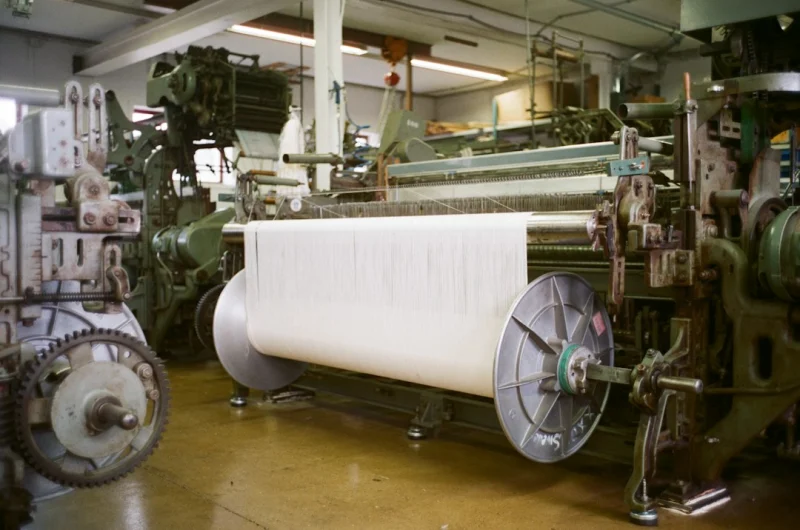
Plain-woven canvas fabric
Squeeze a canvas tote and the firmness you feel comes from the way its yarns cross. Up close, its lengthwise warp yarns go over one crosswise weft yarn and under the next in a plain weave. Warp and weft cross more often in plain weave than in twill or satin. The extra crossings lock the yarns in place and make the cloth firm and strong. Muslin and poplin shirting are plain weaves in much lighter cloth. Canvas sits at the heavy end of the weave because its yarns are thick and packed close together.
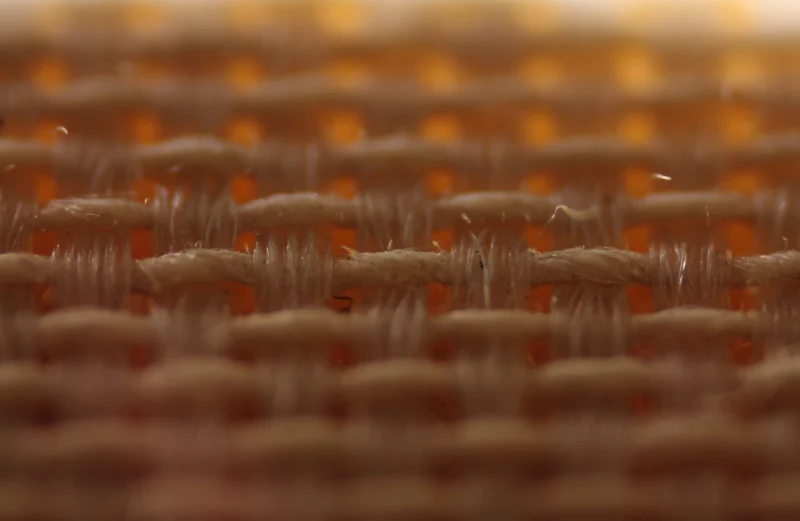
In denim, the indigo-dyed warp passes over two or three white weft yarns before going under one. The crossing points step sideways from row to row and form the diagonal lines of a twill. Twills have fewer crossings than plain weaves of similar yarn and weight and come out less firm than canvas. Canvas is the better pick when a bag must hold its shape. Oxford shirting is a plain-weave relative whose warp yarns are woven in pairs over a weft usually at least twice their thickness.
Quoted specifications
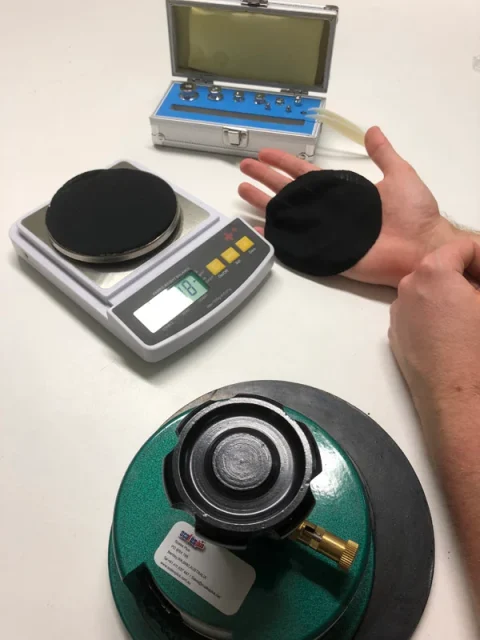
Mills state canvas weight in grams per square meter (g/m², often written gsm) or in ounces per square yard. One ounce per square yard equals 33.9 g/m². US government duck specifications were moved to a square-yard basis as they came up for revision. The industry had adopted that basis for all newly developed specifications by 1924. A weight per linear yard covers a yard cut across the full roll and can't be converted to g/m² until you know the roll width. Quotes are easiest to compare once they are all in g/m². Labs check a sample by weighing a 100 cm² disc cut from the cloth and multiplying the grams by 100.
You can tell from the yarn count and thread count on a quote whether a canvas of a given weight is woven from thick yarns spaced wide or from finer yarns packed close. A cotton yarn's English count is the number of 768 m (840 yd) hanks in 454 g (1 lb) of it. A higher count therefore means a finer yarn. Single yarn is usually written 20s or 20/1. Plied yarn is written with the count first and the number of strands after a slash. A 21s/2 yarn, two strands of 21s twisted together, weighs as much as one 10.5s yarn. Canvas woven from heavier 16s/2 yarn reaches a given weight with fewer threads per inch than canvas woven from 21s/2. Thread count is the number of warp ends and weft picks in an inch or in a centimeter. A cloth with 46 × 33 threads per inch has 18 × 13 per centimeter.
Duck numbers
Heavy cotton canvas woven from thick plied yarns is quoted by duck number. The number is 19 minus the cloth's weight in ounces for one linear yard 56 cm (22 in) wide. Lower numbers mean heavier cloth. Cloth of 19 ounces or more on that basis is numbered 1/0, 2/0 and upward. Duck is described as soft, medium or hard by the number of weft threads per inch, and a hard duck has more of them than a soft one.
| Duck number | Nominal g/m² | Nominal oz/yd² |
|---|---|---|
| 12 | 388 | 11.5 |
| 10 | 499 | 14.7 |
| 8 | 610 | 18.0 |
| 6 | 721 | 21.3 |
| 4 | 832 | 24.5 |
| 1 | 999 | 29.5 |
Duck bought under the US government's 1924 specification was used for tarpaulins, cots, awnings and tent flaps and could weigh 2½ percent more or less than its stated figure. Clothes bags and coal bags appear among those government uses. With a tolerance like that on your order, you can turn away cloth that comes in light. Duck numbers were described back then as a system for people entirely familiar with the material. Write the g/m² figure next to the duck number on the order. An order line reading "10 duck" with no unit could mean 10 oz canvas or No. 10 duck. No. 10 is nominally 47 percent heavier.
Fiber options
Cotton is the usual canvas fiber because it is strong and absorbent and takes dye and print well. Dyed cotton canvas holds its color. Polyester is blended into cotton canvas for strength, and whatever absorbency the blend has comes from its cotton. The blend creases less than pure cotton.
Polyester takes up about 0.4 percent of its weight in moisture and is dimensionally stable. The fiber recovers well from stretching and gives very little over time under a steady load. Bags that get wet often or hold heavy loads keep their size and shape better in polyester canvas. Polyester yarn sizes are given in denier: 600D means 600 grams per 9,000 meters of yarn.
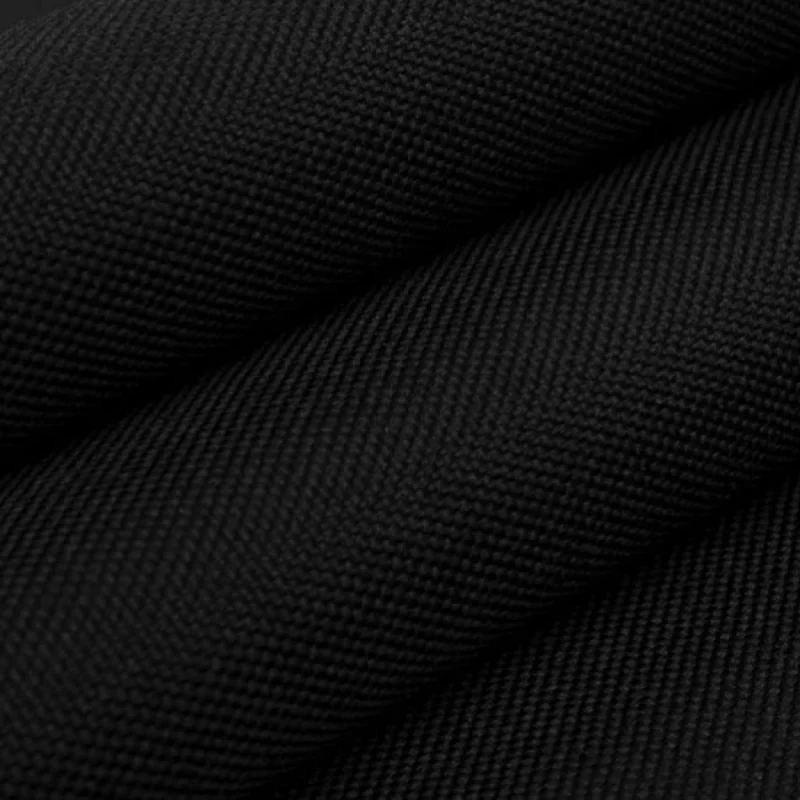
The flax fiber in linen canvas is two to three times as strong as cotton and gains about 20 percent in strength when wet. It resists sunlight well and deteriorates only gradually under long exposure. Linen cloth is stiff and creases easily. It absorbs more moisture than cotton and dries faster. Linen bags need dry storage because mildew grows fast on linen kept warm and humid. Hemp fiber is strong and durable and resists ultraviolet light.
Organic cotton canvas is labeled under the Global Organic Textile Standard (GOTS) at two levels: "organic" for products with at least 95 percent certified organic fiber and "made with organic materials" from 70 percent. The factory that sews a GOTS-labeled bag must be certified because GOTS covers all processing stages up to the finished product. Recycled polyester canvas can be certified to the Global Recycled Standard (GRS) from 20 percent recycled content. The GRS logo is reserved for products that are at least half recycled material. Certification under GOTS or GRS goes beyond fiber content into chemical restrictions and social rules such as bans on child and forced labor. Certifiers issue transaction certificates (TCs) when GOTS or GRS goods change hands. You need a TC covering your order before you call a bag organic or post-consumer on its label or listing. The post-industrial and post-consumer shares of a batch appear on its TC. A supplier's GRS certificate is valid for one year.
Logo decoration
Screen printing is a strong choice for simple, bold logos ordered in bulk and usually costs less than direct-to-garment (DTG) printing on very large orders. Screen prints on cotton canvas come out bright and durable because the cloth absorbs ink well. Water-based ink soaks into the cloth and leaves a soft print. It works best on cotton or on blends with a very high cotton share. Plastisol is the better ink for dark blended canvas because water-based colors can look dull on dark cloth. Once cured, plastisol forms a thick, tough layer that can feel rubbery. Discharge inks are made for dark fabrics and work well only on natural fibers such as cotton. Polyester bags may need a specially formulated plastisol.
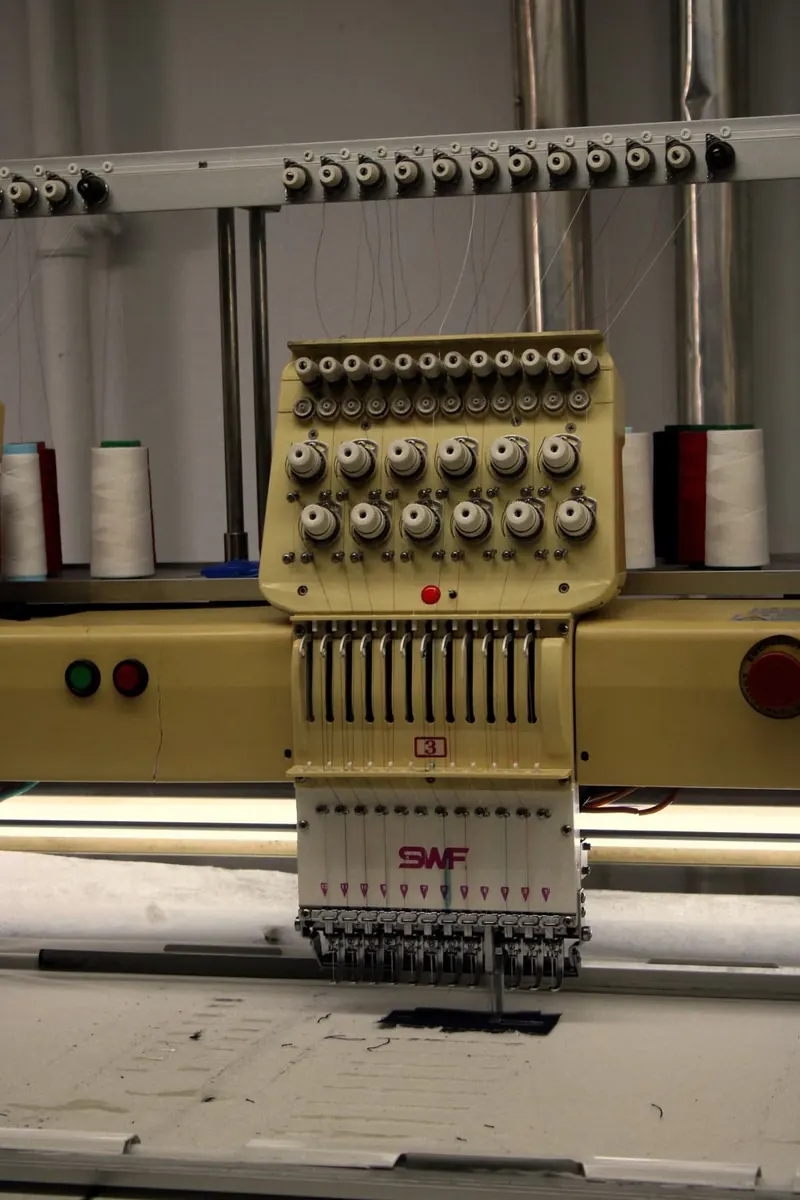
Decorators turn to DTG printing for small orders and highly detailed artwork, and its prints come out best on smooth, tightly woven canvas. Embroidery generally costs more than printing and is a good fit for logos and monograms that must keep their color because thread doesn't fade the way ink can. Heat-pressed transfers suit names and one-off personalization on flat panels. For a bag in heavy use, screen printing or embroidery may hold up longer than a transfer.
Water-repellent finishes
In the AATCC 35 rain test, a lab sprays water at the fabric for a set time and weighs a blotter placed behind it before and after. A taller column of water behind the spray makes the impact harder. The highest level generally used for apparel is a 91 cm (3 ft) column for five minutes. Properly finished cotton canvas of 305 to 339 g/m² (9 to 10 oz/yd²) can pass at that level. Rain-test requirements can be met only by tightly woven cloths such as canvas, and a regular 254 g/m² (7.5 oz/yd²) twill for casual pants lacks a tight enough construction. One canvas at the top of that weight range, given a fluorochemical and resin finish in the lab, let 0.2 gram of water through at the highest apparel level, new or after ten home launderings.
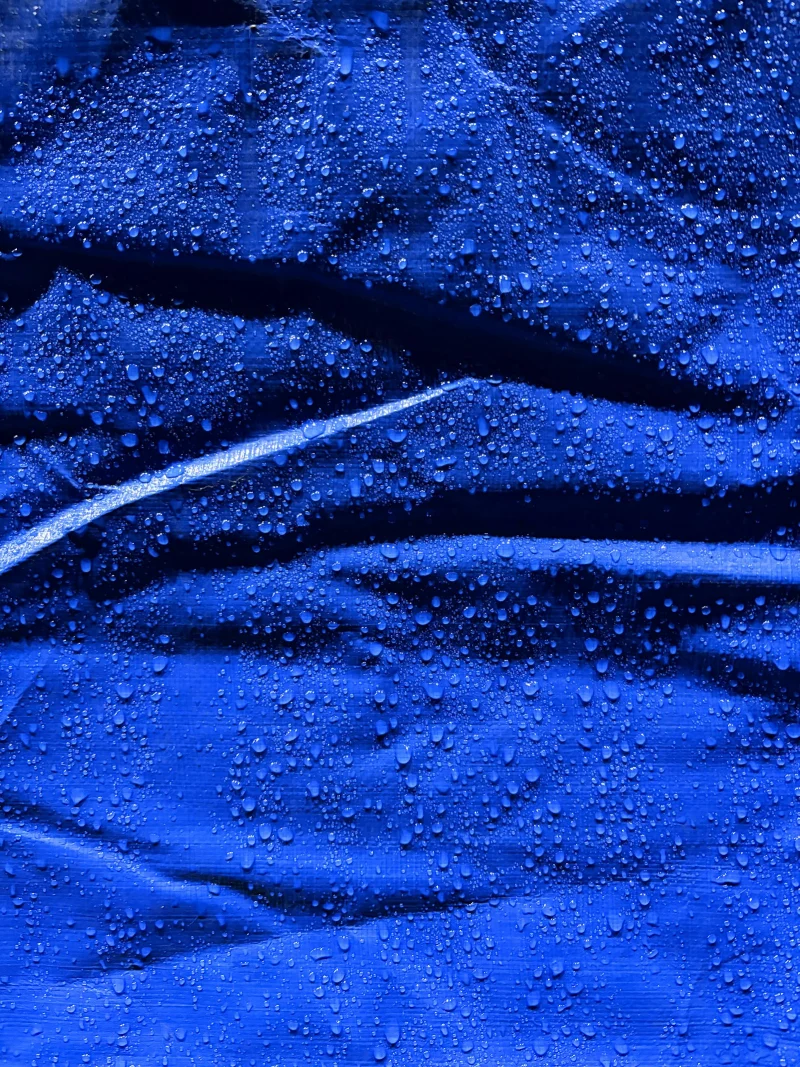
Surface wetting is graded separately in the AATCC 22 spray test on a scale up to 100, and many repellent fabrics must score at least 70. The spray rating of that canvas fell from 100 when new to 80 to 85 over the ten launderings. You can write a minimum spray rating into the order and state the number of home launderings it applies after.
Water-repellent fabric must let air and moisture vapor through. A fluorochemical finish takes very little of that away from cotton. On a cotton twill, the finish left air flow almost unchanged and cut moisture vapor transmission from 810.9 to 771.1 grams per square meter in 24 hours. A second finished canvas in that lab work passed 673.6 grams of moisture vapor per square meter in 24 hours, more than the 564.1 grams of a synthetic jacket sold as breathable.
Fluorochemical finishes repel water and oil and fall within the PFAS family of chemicals. Textile articles sold in California, handbags and backpacks included, have been barred from containing intentionally added PFAS since January 1, 2025. Sales of new apparel with intentionally added PFAS have been barred in New York since that date, and workwear is on the state's list of clothing that often contains PFAS. Professional uniforms may be exempt in New York if the employer requires a distinctive design and the uniform protects the wearer from health or environmental hazards. California's limit on total organic fluorine is 100 ppm and falls to 50 ppm for goods on sale from January 1, 2027. Outdoor apparel for severe wet conditions is exempt in California until January 1, 2028 if it is sold with the disclosure "Made with PFAS chemicals."
The document to get from your supplier is the manufacturer's signed certificate of compliance. A California retailer who relies on it in good faith is not in violation. New York retailers are expected to keep it on site and show it to the state's environmental agency on request.
Waxed canvas fabric
Owners of waxed canvas jackets brush off dirt by hand or with a soft-bristle brush and clean the cloth with cold water from a hose or a damp rag. Marks that water won't shift get a little mild soap before the jacket is left to air-dry. Patches that look lighter than the rest of the jacket show where the wax has worn thin. A quick check is to spray the jacket with water and look at it after five minutes. Water that has soaked into the cloth by then means the jacket is due for fresh wax. The interval between coats depends on how much the jacket is worn. People who wear it outdoors a lot may need to re-wax after a year or two. A hairdryer warms the cloth so it takes up more wax, then a thin coat goes on with a rag or gloved hands and is warmed in before the jacket rests overnight. Any wax left on the surface is wiped off the next morning.
Preshrunk canvas fabric
Cotton canvas that hasn't been preshrunk loses size in the washing machine because it was pulled longer and narrower than its relaxed size during continuous dyeing and finishing. Preshrunk canvas has already been brought close to that size at the mill. Care instructions that recommend tumble drying mean customers will see all the shrinkage left in the cloth. One wash-and-tumble cycle removes roughly 90 percent of it. A complete measurement takes at least five cycles.
Wovens such as canvas are held to much lower shrinkage figures than knits. Fabric sold under the Sanforized trademark may shrink or grow no more than 1 percent in length or width after an ISO 6330 home wash. The limit is up to 1.5 percent higher for tumble-dried fabric and sewn goods. A 40 cm bag panel would lose no more than 4 mm under the washing limit and 10 mm under the tumble-dry limit. A shrinkage limit on the order matters most for cotton canvas because linen shrinks less than cotton and polyester barely changes size in the wash. You can hold a supplier to a preshrunk claim if you put that limit on the order and ask for AATCC 135 results after five wash-and-tumble cycles.
Sources
- INFLIBNET, Textile Manufacturing and Testing (chapters on natural fibres, synthetic fibres, yarns and basic weaves)
- Cotton Incorporated (funded by US upland cotton growers and importers), ISP 1007, ISP 1009, TRI 1014 and glossary entries for oxford and denim
- US Bureau of Standards, Technologic Paper 264, 1924
- Sanforized, Shrinkage Standards
- FESPA, What are the best inks to use for screen printing?
- Impressions, decoration methods for cotton canvas totes, 2026
- Gear Patrol, how to re-wax a canvas jacket, 2024
- California Health and Safety Code §108970 and §108971, and New York State's PFAS apparel advisory
- GOTS key features and the German Environment Agency's Global Recycled Standard summary