Loungewear manufacturer for pajamas, robes and lounge sets
We make Custom (Made to Order) pajamas, robes and lounge sets from your pattern in the fabric and color you pick, from 50 sets a color, and a top with its shorts or pants counts as one set. Through Ready-made (Stock Match), you pick a set that a factory in China has in production now, and we sew your label into 50 or more of it.
Get a quote
Prices per set
Custom pajama sets, robes and lounge sets from Chinese factories cost $4–21 each in orders of 50–500, before freight and US duty, and silk sets and robes $30–90.
| Style | Common fabrics | Factory price each |
|---|---|---|
| Short-sleeve top and shorts | Cotton, modal or bamboo viscose jersey | $5–16 |
| Long-sleeve top and pants | Cotton, modal or bamboo viscose jersey | $11–19 |
| Button-front top and pants | Polyester satin, cotton poplin, flannel | $8–17 |
| Cami and shorts | Polyester satin, rayon | $6–11 |
| Sleep dress or nightshirt | Jersey, polyester, linen | $4–16 |
| Robe | Coral fleece, polyester satin, cotton terry or waffle, bamboo | $5–17 |
| Lounge set | Waffle knit, rib knit, bamboo or modal jersey | $5–21 |
| Kids' snug-fit set | Cotton or bamboo jersey | $4–14 |
| Silk pajama set or robe | Mulberry silk, 16–22 momme | $30–90 |
Polyester satin and fleece price at the low end, and bamboo, modal and linen near the top. Factories that publish quantity breaks take 1–20% off the price per set between 50–100 sets and 300–500.
We quote our own Custom price per style, and a robe sold with matching pajamas counts as one three-piece set. Brushed or heavier fabric and a button-front top with a notched collar and piping raise our price. Sizes XXS to 3XL cost the same, and 4XL to 6XL sets are 15% more.
We charge a one-time development fee of $120–220 for each new Custom style. You get the pattern, the sample and its first two revisions for that fee.
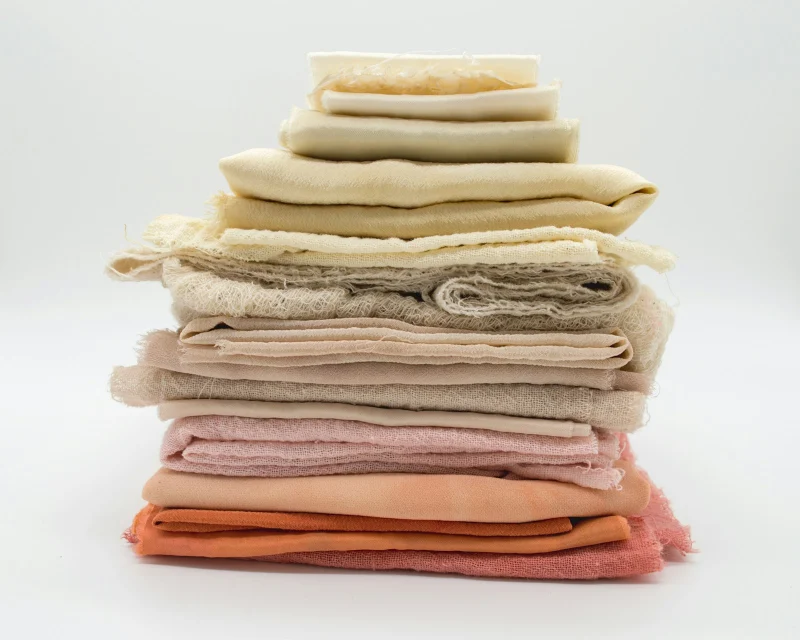
Lightweight pajamas
Ask for pre-shrunk fabric on any cotton set. Cotton poplin that skipped pre-shrinking can lose 3–5% in a single wash, and untreated cotton jersey 5–8% in length. If you sell to retail chains, expect a shrinkage limit after three washes of 5–6% for knits and 3% for wovens.
A set in 100% modal jersey can pill. Blending modal with cotton often reduces the pilling and lowers the fabric price. Cotton-modal pajama jersey comes in blends of 47–59% cotton, and the blend changes the duty. Cotton has to outweigh the modal and any spandex together for the set to pay the cotton rate. A 50/50 set pays the higher rate for man-made fiber, the same as an all-modal set.
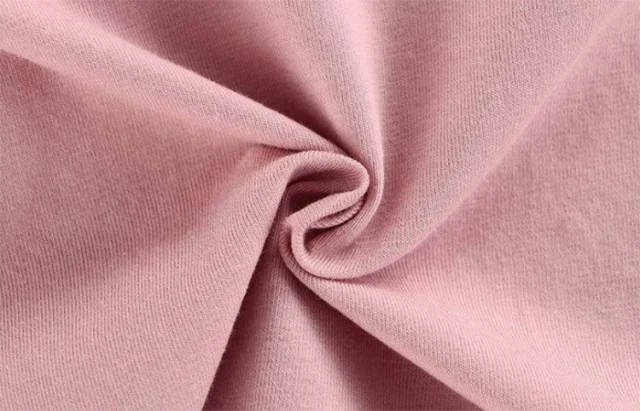
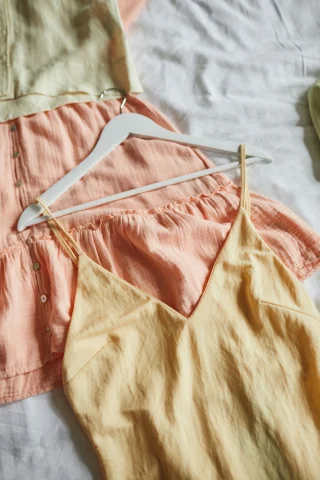
Polyester satin of 130–150 gsm suits cami sets, sleep dresses and long-sleeve satin pajamas and machine washes on a gentle cycle. In 16 CFR 1610, the federal flammability standard for clothing textiles, a fabric without a pile or nap is exempt from the burn test at 88 gsm or more, whatever its fiber. Lighter fabric is exempt only when made entirely of polyester, nylon, acrylic, modacrylic, olefin, wool or a mix of them. Spandex isn't on that list, and stretch satin under 88 gsm has to be tested. Silk for sleepwear runs 16–22 momme. Silk of 22 momme, about 95 gsm, is heavy enough for the weight exemption, and lighter silk of 16–19 momme needs the test, at $50–200 a fabric. Silk sets need a cold hand wash or a delicate cycle in a mesh bag, then air drying, and the care label should say so.
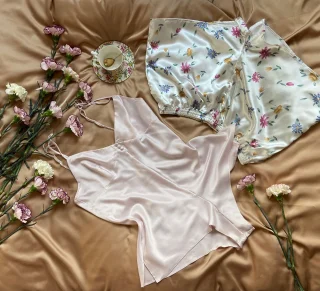
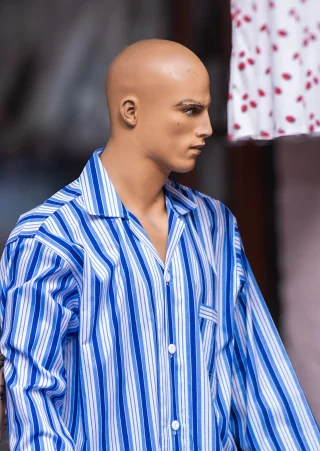
We cut button-front pajamas with a notched collar and piping from cotton poplin, cotton sateen or polyester satin, and from flannel for winter. Sleep dresses and nightshirts come in the same jersey, satin and poplin. We sew men's button-front and jersey sets to a men's size chart.
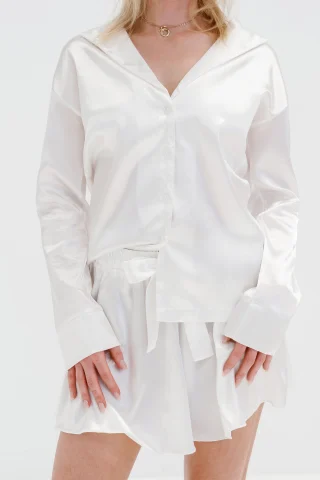
Lounge sets at US customs
Budget jersey tee-and-shorts sets and waffle or rib lounge sets at loungewear duty unless their cut reads as pajamas. US Customs and Border Protection (CBP) limits sleepwear to garments designed for wear only to bed for sleeping and looks at the garment itself first. In ruling NY N351058 of July 2025, it classed a loose modal-spandex top with shorts, a lyocell-blend set with slit-hem pants and a modal sleep dress as multi-use loungewear. The pajama sets had a LOFT SLEEP label and one price ticket per set, and CBP went by their style and construction.
In ruling HQ H040736, CBP classed a girls' brushed-polyester set as sleepwear: a top with a notched collar and five buttons over pants with an elastic drawcord waist. It took the equal numbers of tops and bottoms imported together and the tags reading "sleep couture" as support. When styling is ambiguous, CBP weighs how a garment is sold, advertised and marketed, and it treats invoices with caution as possibly self-serving. In rulings HQ 962871 and HQ H304295, it gave the loungewear rate to garments with a button fly, a buttoned back pocket, a drawstring cowl neck or fabric heavy enough to wear outdoors in cool weather. H304295 also cited the seller's website, which said the set could be worn day or night, in and out of the house.
We pay the duty when the sets clear US customs and bill you for it at cost, as a separate invoice line. Each rate is the normal US duty plus Section 301 tariffs totaling 20 percentage points on goods from China.
| Women's knit pieces from China, October 2026 | Duty as sleepwear | Duty as loungewear |
|---|---|---|
| Cotton top | 28.5% | 36.5% |
| Modal or rayon top | 36% | 52% |
| Cotton pants or shorts | 28.5% | 34.9% |
| Modal or rayon pants or shorts | 36% | 48.2% |
| Cotton sleep dress | 28.5% | 31.5% |
| Modal or rayon sleep dress | 36% | 34.9% |
Winter pajamas and robes
Yarn-dyed flannel plaids are woven from yarn dyed before weaving, and mills ask for 2,000 meters or more to weave a new one to your design. A plaid from a mill's stock range avoids that minimum.
The US Consumer Product Safety Commission (CPSC) counts flannel, terry and fleece among raised-surface fabrics, the ones with a pile or a brushed nap. Velour and brushed jersey belong to the same group. A raised-surface fabric gets no weight exemption under 16 CFR 1610, and one with cotton, rayon or spandex in it has to be burn-tested. Coral fleece and sherpa in 100% polyester are exempt. In 2019 RH recalled about 5,400 adult robes of 100% cotton terry for failing this standard. For adult clothing, the importer certifies compliance in a General Certificate of Conformity, backed by a test or a reasonable testing program, and the test needn't be run by a CPSC-accepted lab.
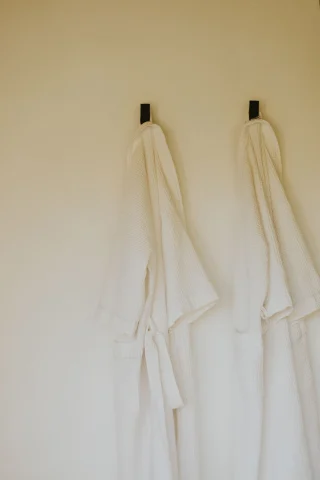
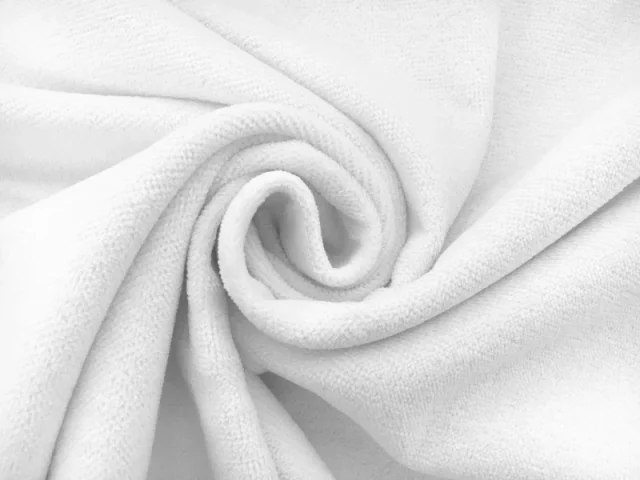
Cotton terry for robes runs from 350 gsm to more than 500 gsm. The most common weight is 400–500 gsm. Terry over 500 gsm dries the skin better and takes longer to dry itself. Waffle robes of 200–260 gsm are lighter and dry faster than terry. Velour robes have terry inside and a sheared, smooth outside.
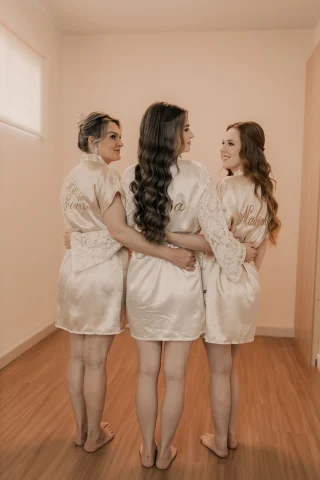
Coral fleece and sherpa can shed fibers after washing, and a wash test before production shows how much. We cut satin kimono robes, bridesmaid robes among them, from polyester satin or silk. For a monogram or name, we charge $10–75 once to make the stitch file the embroidery machine runs, then $1–3 for each thousand stitches. Allow 5–10 extra days for embroidery, 1–3 of them for the stitch file.
Kids' and family pajamas
In kids' sizes we make snug-fit pajamas only. CPSC treats any garment sized above 9 months up to size 14 and meant mainly for sleeping or lounging as children's sleepwear, robes included. Children's sleepwear has to pass flame tests or fit snugly. Loose kids' robes and nightgowns need flame-resistant fabric, and we leave them out of our kids' range.
CPSC caps the chest, waist, hip, arm and leg measurements of each snug-fit size, and a 6X chest may measure 24¾ inches at most. Lace, ribbon or appliqué may stand out no more than ¼ inch from the garment.
Snug-fit sets need a yellow hangtag of 1½ × 6¼ inches with the CPSC warning that the garment should fit snugly and isn't flame resistant. WEAR SNUG-FITTING, NOT FLAME RESISTANT goes on the center-back size label, right under the size. Every set gets a permanent tracking label with its production lot. The US importer issues a Children's Product Certificate for the pajamas once a CPSC-accepted lab has tested them.
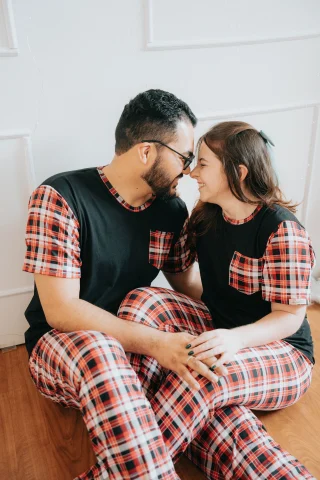
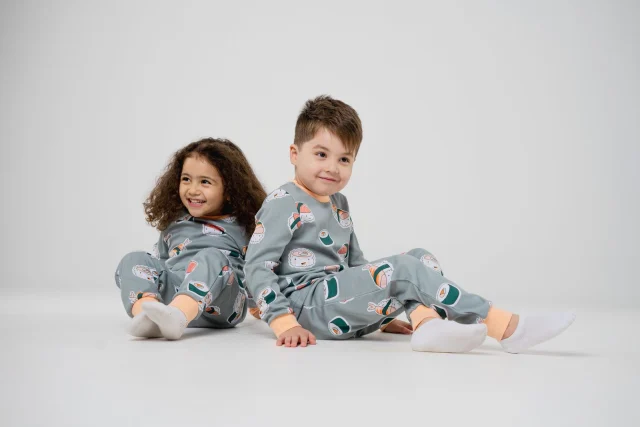
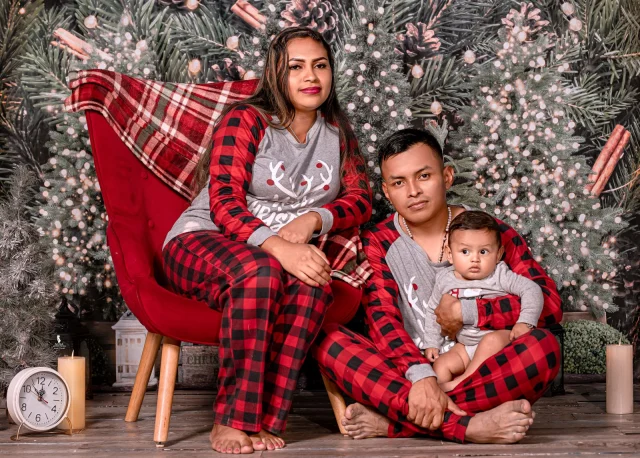
For Christmas and other matching family pajamas, we cut the kids' sets snug-fit from the jersey printed for the adults' sets. The print can come from a mill's stock designs, or we have your own design digitally printed at $1–4 a meter, fabric included. The printer's minimum per design and the extra days go on your quote.
Labels
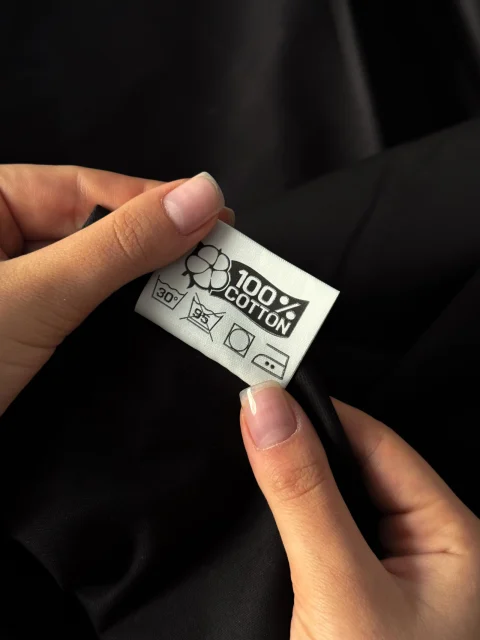
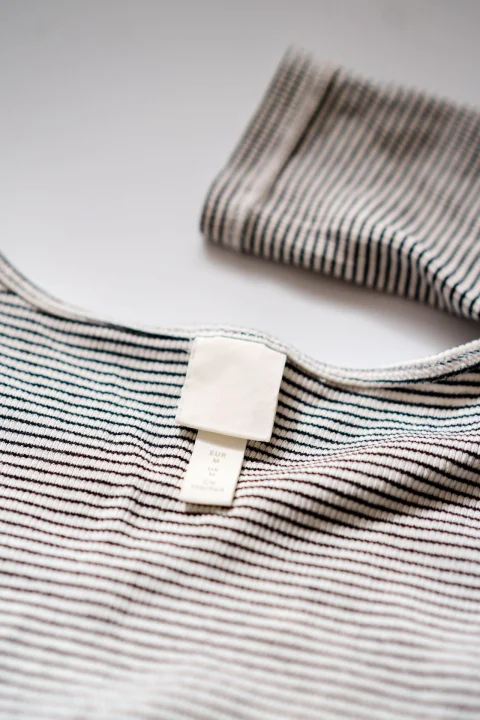
We list every fiber on your sewn-in label with its generic name and its share of the weight, largest first, and add the country where the set was made and your company's name. Bamboo viscose goes on the label as rayon or viscose, or as rayon made from bamboo if you want bamboo named. Kohl's and Walmart agreed in 2022 to pay $5.5 million in FTC civil penalties for selling rayon products as bamboo. A claim that the fabric keeps the bamboo plant's antimicrobial properties needs scientific tests behind it.
Made in China goes on a label inside the neck at its center, and online product pages have to say the set is imported. Care instructions go on a permanent label that must stay readable for the garment's whole life.
Custom prices include your neck label and branded packaging. A hang tag adds $0.25 to a set. On Ready-made sets we charge $0.35 to sew in your label and $0.45 for logo packaging. We make labels, tags and packaging from 50 pieces of a design.
Samples and delivery
Counting from your deposit, a Custom order in stock colors needs 31–48 days to reach your US address when the first sample passes with no changes. We sew that sample in 7–12 days and express it to you in 3–6. Once you approve it, bulk sewing runs 15–20 days, and air freight to you takes 6–10.
A third revision round costs $30–80 and moves delivery back 8–13 days. For a range past 3XL, we sew a size set in your smallest and largest sizes and bill it as one more round.
When no stock color matches your swatch, we have the mill dye the fabric to match it, at $80–150 a color. Before dyeing the full lot, the mill dyes a small swatch called a lab dip for you to approve, and meanwhile we make the sample in the nearest stock color. Dyeing adds 5–7 days to delivery. Leftover dyed fabric stays with us for six months, ready for a same-color reorder. Reorders skip the sample stage and reach you within 21–30 days of the deposit.
To start a Ready-made order, show us a set and we'll send photos and factory prices of the closest matches that factories in China are making now. The minimum is 50 sets of one style, split however you like across the factory's stocked colors and sizes. Our sourcing fee on top of the factory price is 12% for invoices under $5,000 and drops in steps to 5% from $50,000. We take full payment up front and ship Ready-made sets by express in 11–18 days to your US address.
Our inspector photographs the finished sets, and we build a Launch Kit from those photos for every style you order, at no cost. The kit has five Basic images showing the set alone against a solid color, one Creative image of an AI model in the set and a vertical video of 10 seconds whose last frame is your logo. You pick the set color shown in the kit and, for the Creative image, the model, pose and background. Basic images of the set's other colors cost $4 each.
Send us a photo of the set, the fabric and colors you want and your size range, and we'll quote within 24 hours.
Get a quote