
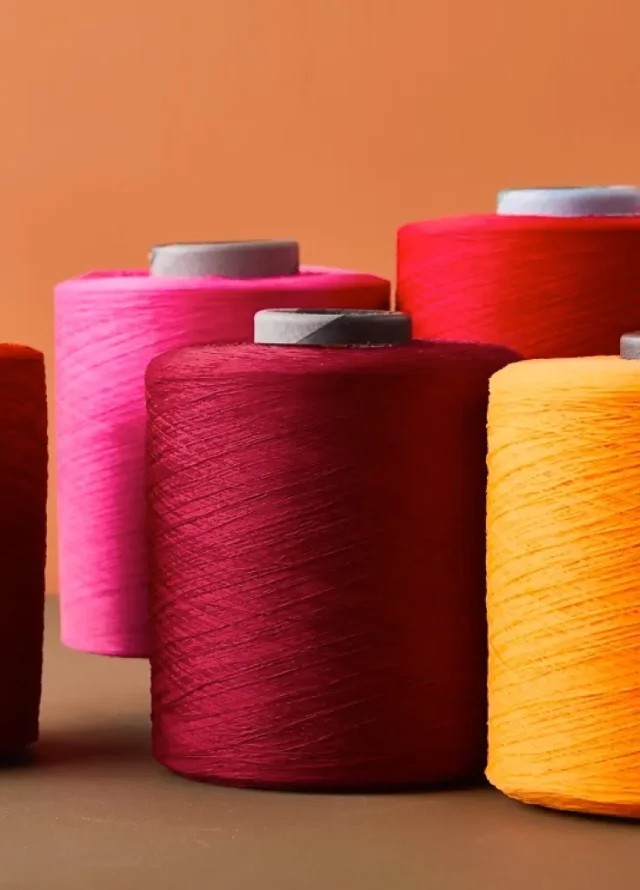
Polyester fabric from polymer to yarn
PET is made by polymerizing ethylene glycol and terephthalic acid. Heated together with catalysts, they turn into a thick molten mass that can be spun straight into fiber. Mills then stretch the fresh strands to line up the polymer chains, and that alignment gives polyester its strength and stiffness.
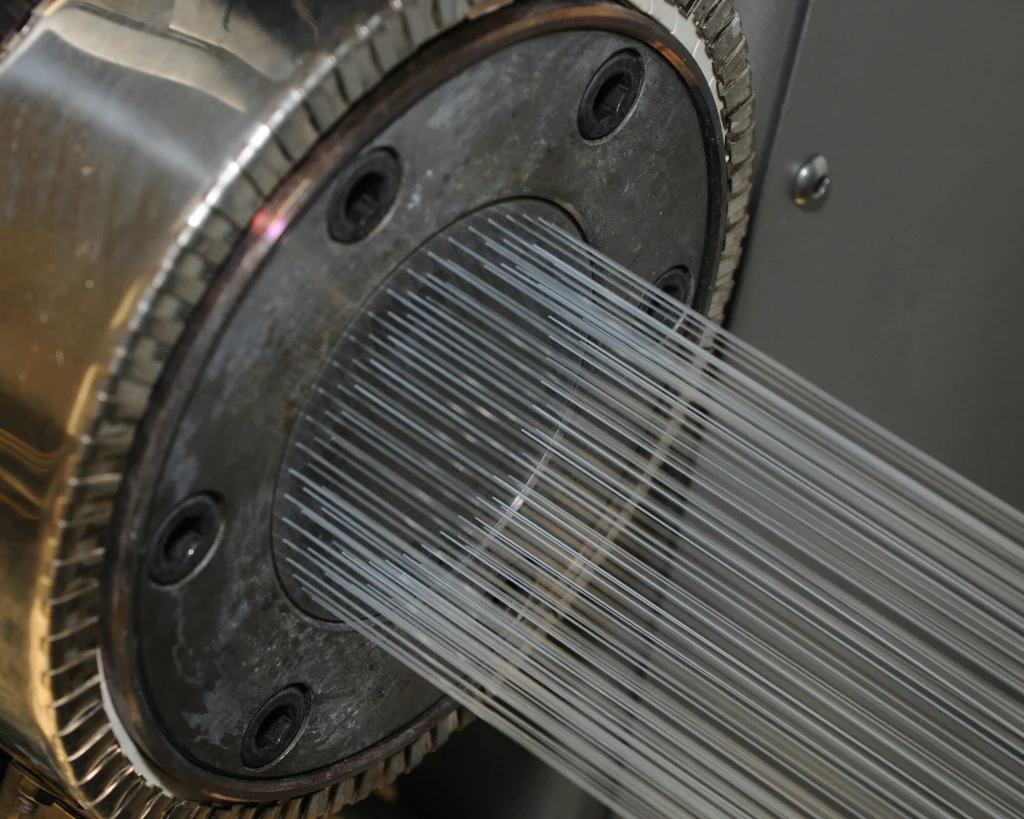
The strands either stay continuous as filament yarn or get cut short and spun the way cotton is. Filament yarn is glossier and stronger than spun yarn. Gym tops and satin dresses get their slick surface from it. Spun polyester has less shine. Its short fibers leave ends poking out of the yarn. For tees that shouldn't look synthetic, spun polyester is the right yarn.
Polyester drawn finer than the most delicate silk is sold as microfiber. Finer fibers make softer, more flexible fabric, and microfiber drapes easily and can feel like suede. Tightly woven microfiber shuts out wind and makes a good windbreaker fabric.
Polyester fabric in daily wear
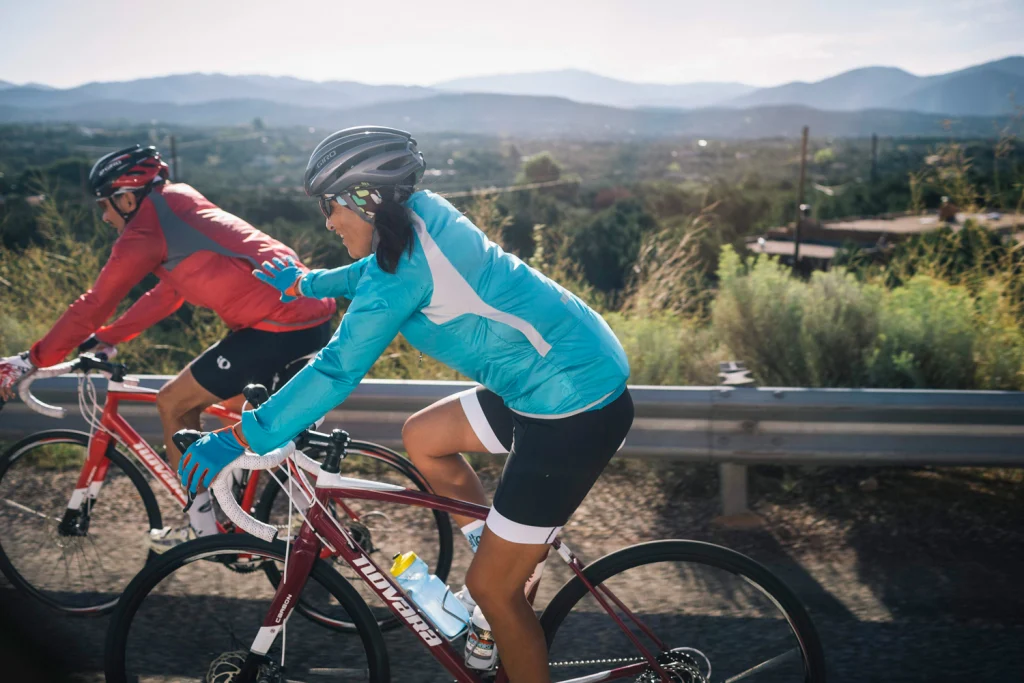
Untreated polyester shirts feel clammy on a hot day. The fiber absorbs so little moisture that sweat stays on the skin. Cotton soaks it up but takes much longer to dry. Workout pieces need a wicking finish that lets sweat pass through the fabric and dry on the outside.
Polyester resists shrinking and stretching in the wash. It dries quickly and comes out with few wrinkles. Plain polyester can go in a warm wash and a low dryer, and a moderately warm iron is enough if it needs pressing. Sublimated prints need gentler care because the dye starts moving again above 138°C (280°F). Their care label should call for a cold wash and low tumble drying. Ironing should stay at the one-dot setting of 110°C (230°F) or lower.
Polyester fabric by garment type
Activewear
Leggings and sports bras combine spandex with polyester or nylon. Nylon is exceptionally strong and abrasion resistant, but it holds up poorly in continuous sunlight. For leggings that take a lot of rubbing, nylon-spandex lasts longer. Printed designs and gear worn for hours outdoors belong in polyester-spandex. Sublimated designs, from team jerseys to printed leggings, need a fabric that's at least 65% polyester.
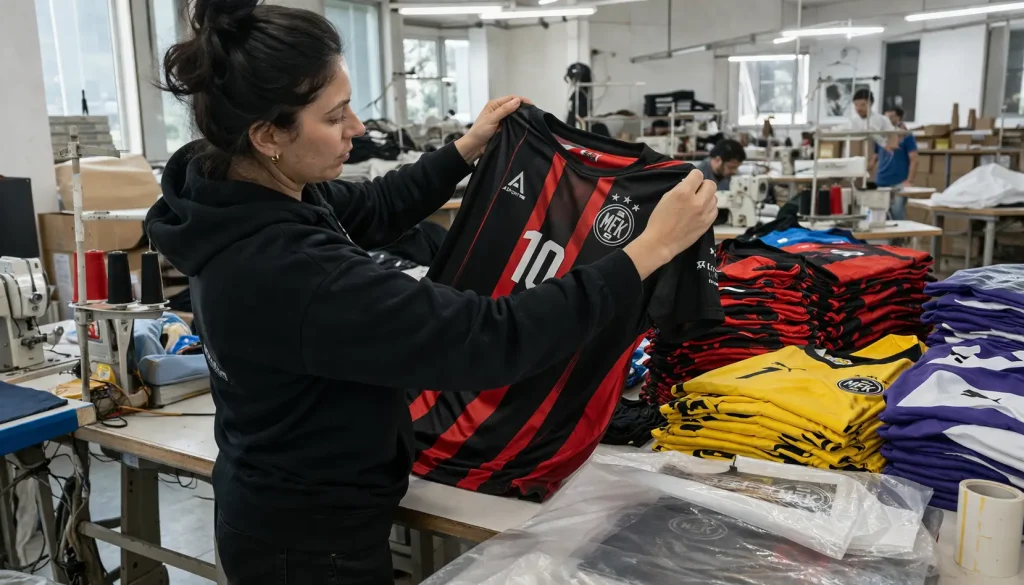
Approve a printed sample on the actual garment color before bulk for screen prints and DTF (direct-to-film) transfers on polyester. Heat from curing can pull dye out of a polyester garment and into the print. White lettering on a red jersey can turn pink.
OEKO-TEX, a testing and certification system for harmful substances in textiles, often found bisphenol A (BPA) in tests of textiles worn directly on the skin. The World Health Organization classes BPA as an endocrine disruptor. OEKO-TEX cut its STANDARD 100 limit for BPA from 100 to 10 milligrams per kilogram in April 2025. Get the fabric's current STANDARD 100 certificate in product class 2, the class for items worn against the skin, before you approve an activewear sample. Certificates last one year and can be checked online at any time.
Swimwear
Swim fabric is roughly four parts polyester or nylon to one part spandex. Polyester and nylon hold their shape when wet and dry fast. Chlorine attacks the spandex first and can cut a swim fabric's strength by 65% after 300 hours of chlorine and sunlight. Polyester stands up to chlorine well compared with nylon.
Make lap and swim-team suits in polyester-spandex. Seawater is gentler on swim fabric than chlorine. Nylon-spandex works for fashion styles worn mostly at the beach. Fabrics made with PBT, another type of polyester, are sold as more durable in chlorine. They make sense for team swimwear used in daily training.
Outerwear
Rain shells are made from polyester and from nylon, but the fiber matters less than the waterproof layer behind the face fabric. That layer is either a coating or a laminated membrane. Membranes stay waterproof longer and breathe better than coatings because they're thinner and can't wear off.
Durable water repellent (DWR) finishes on the face fabric make rain bead up and roll off. No DWR is permanent. Fluorine-free DWR keeps the jacket clear of state PFAS bans. Taped seams keep rain from seeping in through the needle holes.
Dresses
Very fine polyester filament is used as artificial silk. Dresses in chiffon or georgette need a lining. The two fabrics are see-through. Chiffon is a lightweight plain weave of finely twisted yarns. Georgette's dull, crinkled surface comes from yarns twisted in alternating directions, and crepe gets a similar fine crinkle from high-twist yarns or a crepe weave.
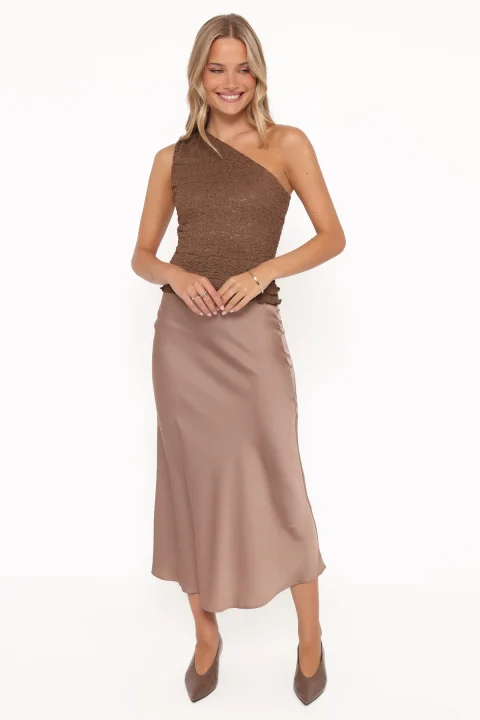
Heat-set pleats hold well in machine-washable polyester. It's the fabric for pleated dresses and skirts that get washed at home. Require a seam-slippage test on first samples in satin and chiffon. The lab pulls on a sewn seam and checks whether the yarns slide apart beside the stitching.
Basics
Cotton-rich fabric is the better pick for everyday tees. Cotton absorbs the sweat that polyester leaves on the skin. Polyester-cotton blends dry faster and wrinkle less than all-cotton. Training tees are where 100% polyester with a wicking finish makes sense.
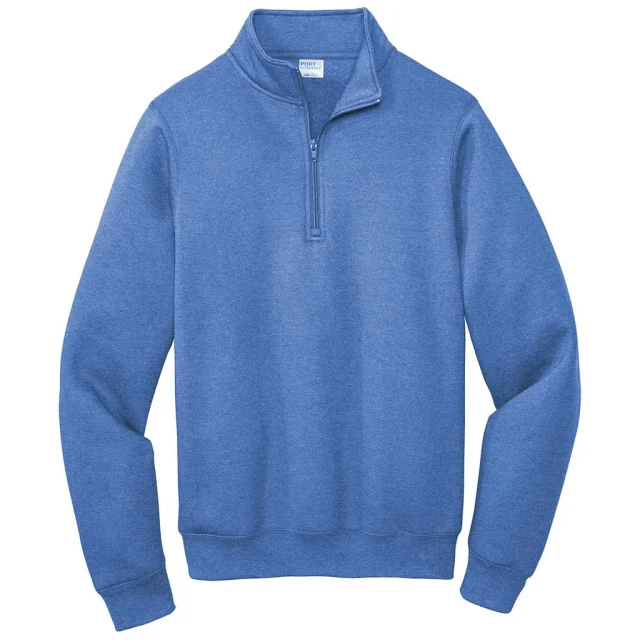
Pilling is one of polyester's known weak spots. On fleece pullovers and quarter-zips, it's worth washing a sample and checking it for pills before you approve bulk.
Workwear
Polyester-cotton uniform fabric combines polyester's strength and wrinkle resistance with cotton's absorbency. Polyester attracts oily soil, and oil loosened in the wash can settle back onto it. Its low absorbency makes those stains hard to remove. Specify a hydrophilic soil-release finish on uniform fabric. Soil-release finishes are based either on fluorocarbons, which repel oil, or on hydrophilic substances that draw water to the fiber surface. Rhode Island's PFAS ban covers everyday work uniforms by name.
Children's sleepwear
Loose-fitting pajamas, nightgowns, robes and loungewear in sizes above 9 months through 14 have to pass federal flammability tests. Untreated 100% cotton, silk, rayon and modal typically fail them. Most fabrics that passed the 1972 standard without chemical treatment were polyester. It became manufacturers' fabric of choice for children's sleepwear.
Loose styles go through a lab accepted by the Consumer Product Safety Commission (CPSC) in three rounds: the fabric, prototype garments and production garments. Production garments are tested in batches of up to 500 dozen. As the importer, you issue the Children's Product Certificate from those results. The garments need a permanent care label with instructions that protect their flame resistance and a unit-number label that traces them to the tested fabric and production lots.
Tight-fitting styles within the CPSC's maximum measurements skip the sleepwear tests but have to meet the general flammability standard for clothing. The front of the size label at the center back has to show WEAR SNUG-FITTING, NOT FLAME RESISTANT in capital letters directly under the size, inside a line border. The hangtag must read "For child's safety, garment should fit snugly. This garment is not flame resistant. Loose-fitting garment is more likely to catch fire."
State PFAS bans
State bans on per- and polyfluoroalkyl substances (PFAS) cover apparel, including chemicals added to the fabric for a finish. New York and Rhode Island define the manufacturer as the company whose brand name is on the garment. The legal duty is yours. Keep a PFAS test report on file for any fabric with a repellent finish. An importer or first US distributor takes the manufacturer's role only when the brand owner has no US presence.
| State | Everyday apparel | Outdoor gear for severe wet conditions |
|---|---|---|
| California | Banned from Jan. 1, 2025, for PFAS added on purpose or total organic fluorine of 100 parts per million (ppm) or more, dropping to 50 ppm in 2027 | Banned from Jan. 1, 2028, with a "Made with PFAS chemicals" disclosure until then |
| New York | Banned from Jan. 1, 2025, for PFAS added on purpose, with a limit set by regulation taking effect by Jan. 1, 2027 | Banned from Jan. 1, 2028 |
| Maine | Banned from Jan. 1, 2026 | Disclosure required from Jan. 1, 2029 |
| Vermont | Banned from Jan. 1, 2026 | Not listed separately |
| Washington | Banned from Jan. 1, 2027 | Reports due Jan. 31, 2027 |
| Rhode Island | Banned from Jan. 1, 2027, including everyday work uniforms | "Made with PFAS chemicals" disclosure required from Jan. 1, 2029 |
| Colorado | Banned from Jan. 1, 2028 | Disclosure until the ban on Jan. 1, 2028 |
| Connecticut | Notice to the state and a PFAS label on the product from July 1, 2026, then banned from Jan. 1, 2028 | Disclosure from Jan. 1, 2026, then banned from Jan. 1, 2028 |
California requires manufacturers to give sellers a certificate of compliance. The severe-wet category covers gear built for outdoor experts facing extreme, prolonged rain or immersion and not marketed to everyday consumers. An everyday rain jacket counts as ordinary apparel.
Recycled polyester claims
The recycled polyester in a garment almost always started as plastic bottles. Recycled fiber made up about 12% of all polyester in 2025, and bottles and other non-textile waste supplied 97% of it. Only around 3% came from old textiles, equal to 0.3% of all polyester. You'd need proof of textile-to-textile content before claiming your polyester came from old clothes.
Textile Exchange allows its recycled logos only when certification reaches the seller in the last business-to-business sale. That's generally the garment factory or the brand. A brand that sells to retailers has to be certified itself.
Under the Federal Trade Commission's Green Guides, an unqualified "recycled" claim is fair only when the whole product, apart from minor parts, is recycled. For a tee with 60% recycled polyester by weight, the tag should read "made with 60% recycled polyester." Broad terms like "eco-friendly" need a specific benefit you can prove right beside them.
Sources
- Encyclopaedia Britannica, Polyethylene terephthalate
- Textile Exchange: Materials Market Report 2026; Labeling with a standard logo
- University of Borås and UHI, Spun yarn production
- FabricLink: Polyester; Nylon; Microfibers; Fiber and fabric care
- OEKO-TEX: New regulations 2025; STANDARD 100 B2B brochure
- ASI, Tips for avoiding dye migration
- Carolina Quintero Rodriguez, RMIT University, in The Conversation
- Backpacker, Gear School: Raingear
- CAMEO, Museum of Fine Arts Boston: Chiffon; Georgette; Crepe
- Fibre2Fashion, Soil release finish
- CPSC: Children's sleepwear FAQ; Fact sheet; 16 CFR 1615.1
- GAO, Children's sleepwear, HEHS-99-123
- State PFAS laws: Morgan Lewis, 2024; Morgan Lewis, 2026; New York ECL §37-0121; Rhode Island Public Law 2024, ch. 345; Colorado SB24-081; BCLP on Maine; Beveridge & Diamond on Connecticut
- Federal Trade Commission, Green Guides