
Custom sportswear for teams and sports brands
We make game jerseys for club teams and company leagues at audited partner factories in China. Gyms and sports labels sell the running shorts and performance polos we make under their brand name.
Get a quoteMatch kits
Club soccer players have to wear undershirts in the main color of the jersey sleeve and tights in the main color of the shorts. When your sleeves contrast with the body, we dye the base layers to the sleeve color and ship them with the kit.
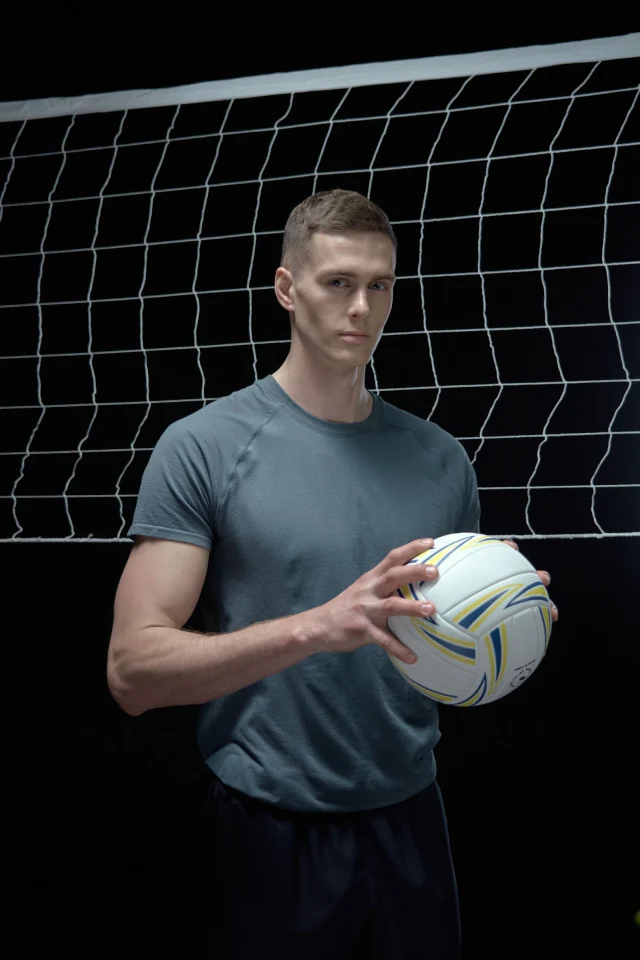
High school volleyball squads wear matching undershirts, apart from the libero. Undershirts in the jersey's main color are legal. Ours are dyed to that shade. The libero's top comes in a contrasting color and counts as a second color on your order.
Rugby players want a jersey that fits close to the body. Loose fabric is easy for a tackler to grab. We make rugby jerseys from a stretchy polyester-elastane knit heavier than a soccer shirt's and triple-stitch the shoulder and underarm seams. The sleeves reach at least halfway from the shoulder point to the elbow. Shorter sleeves aren't legal in a match.
Esports teams wear jerseys on camera and at live events. The player's handle goes across the upper back where a surname would sit on a soccer shirt. When your roster has handles of up to 14 characters, we size the back lettering to the longest one and print the number below it.
Baseball jerseys
We suggest two-button pullovers for company softball leagues. Buttons down the whole front take longer to sew and raise the price per jersey. Traditional chest lettering is tackle twill. Tackle twill letters are cut from twill fabric and stitched down around the edge.
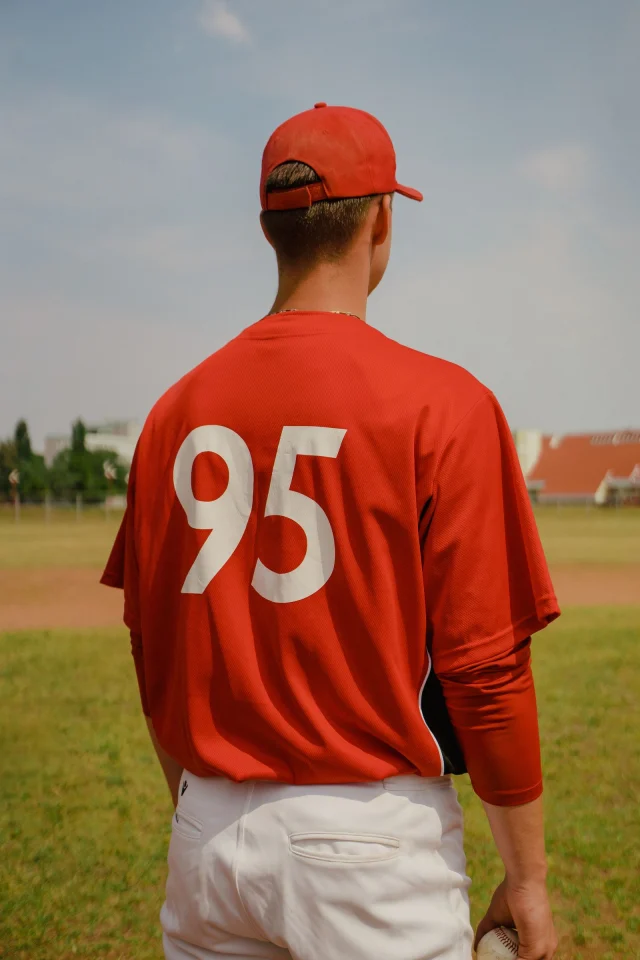
In high school play, the back number on a baseball jersey is a plain figure at least 8 inches tall. Softball backs need 6 inches. Front numbers are optional. White or gray undershirt sleeves aren't allowed on a pitcher. Pitchers get their undershirts in a dark club color.
Hockey jerseys
Your goalies need a goalie cut. It is wider across the chest and arms than a player's jersey and longer at the hem. A senior goalie cut measures around 30 inches from armpit to armpit. Senior XL player jerseys measure about 27.
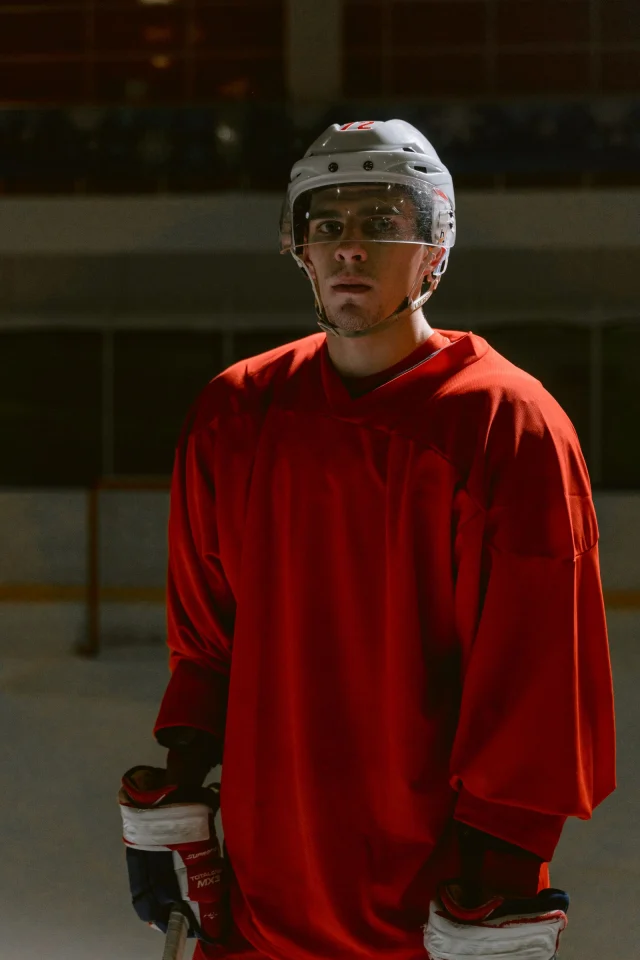
Elbows and shoulders wear through first. Our hockey jerseys get a second layer of knit at those spots. High school hockey players wear numbers at least 10 inches tall on the back and 4 inches tall on the sleeves, in a color that contrasts with the jersey.
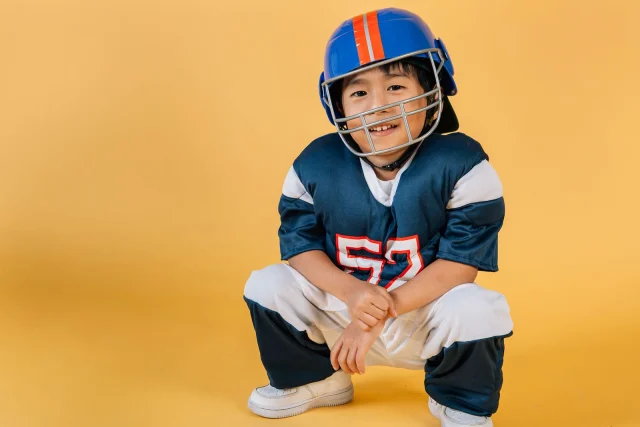
Football jerseys
High school football teams play home games in a dark jersey with no white on the body and away games in white. Plan on two jersey colors from your first order.
Game jerseys have to cover the shoulder pads and reach down to the waistband of the pants. We cut them from polyester mesh with about 10% spandex and sew stretch panels into the sides. The panels pull the body snug over the pads. Practice jerseys are cut looser from heavy mesh.
Numbers on a high school football jersey stand at least 8 inches tall on the front and 10 on the back. Their strokes are about 1.5 inches wide.
Running wear
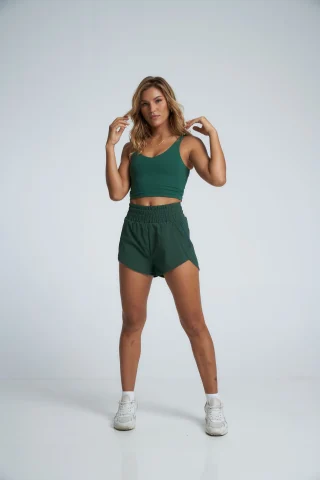
Men's running shorts in US stores come mainly in 5-inch and 7-inch inseams. If your customers wear the same pair for gym training, start with the 7-inch. Women's ranges sit at 3 and 4 inches. Split racing shorts go down to 2.
Our racing shorts have a light mesh brief sewn into the waistband. Customers who want a pocket on the leg for their phone need a 2-in-1 that replaces the brief with a compression short under the shell and puts the pocket on its thigh. Chinese factories charge up to $2 more a pair for that build.
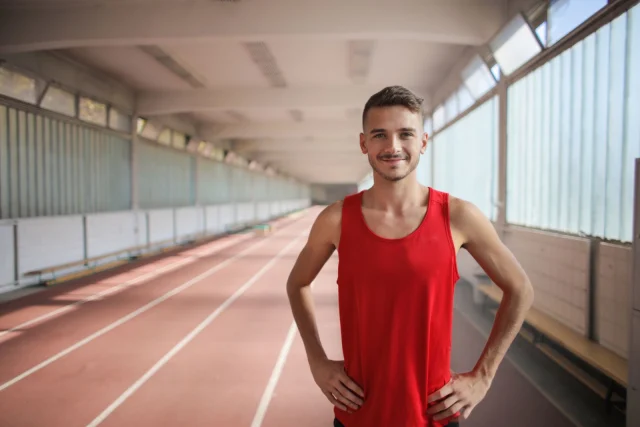
Club names go on racing singlets as heat transfers. Embroidery would pucker their open mesh of 80–150 grams a square meter (gsm).
Performance polos
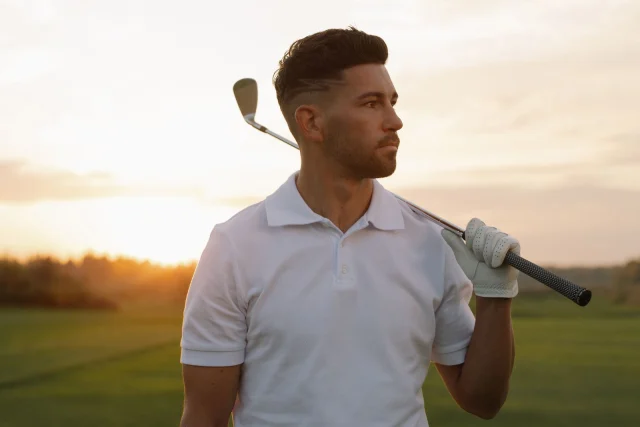
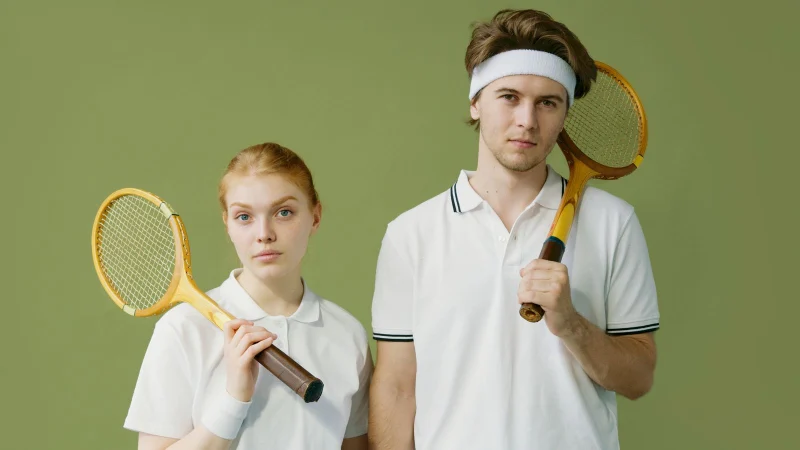
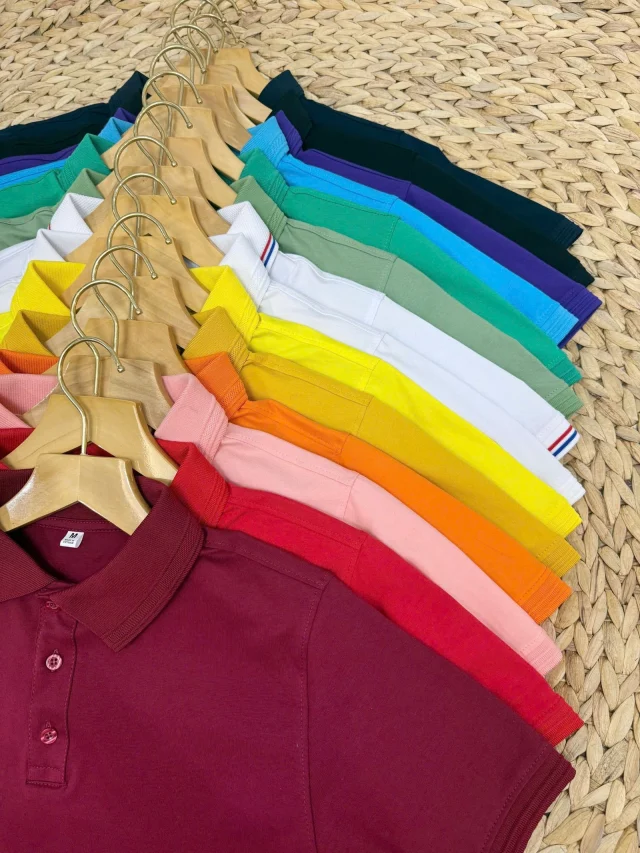
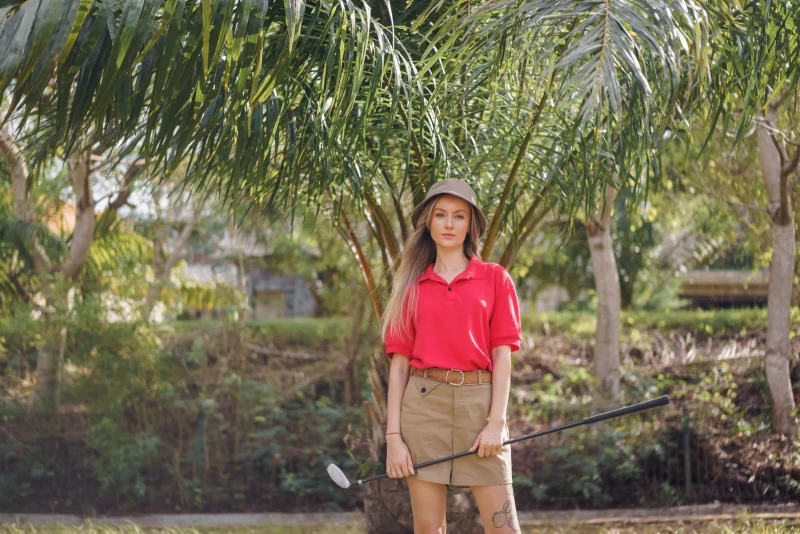
Golf clubs and gyms order performance polos for their staff. For those polos, pick smooth polyester jersey of 180–220 gsm. Pique's small honeycomb texture stops a pressed logo from lying flat. Spandex at 5–12% of the blend lets a golfer turn through the swing without the shirt pulling across the shoulders.
If you want stripes in your colors on the collar, a separate workshop knits that collar flat. That workshop's minimum goes on your quote. For staff polos, a collar cut from the shirt fabric keeps the base price.
Cycling jerseys
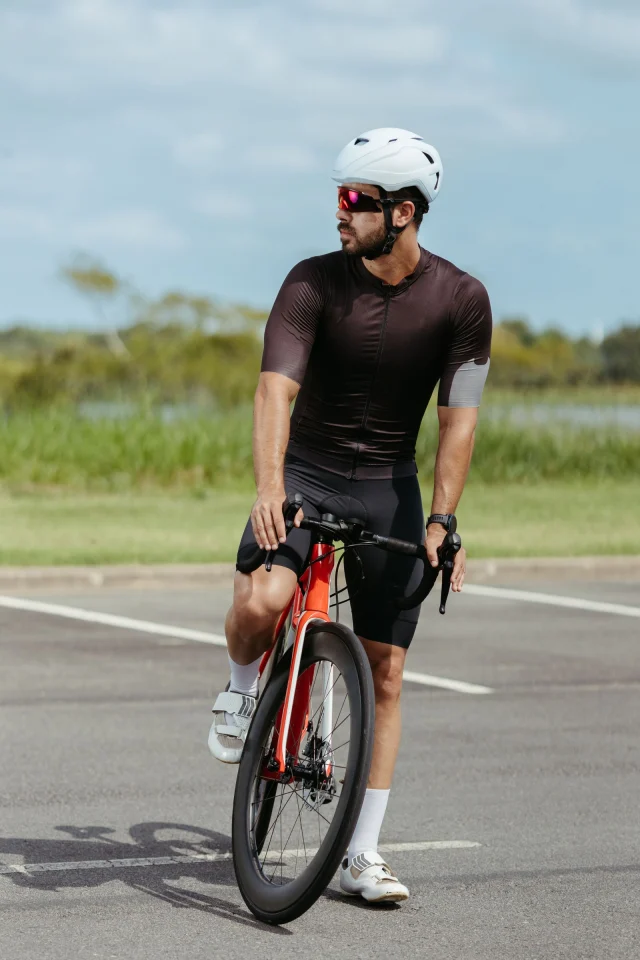
Cycling clubs mostly order sublimated jerseys. Sublimation dyes the whole design into white polyester and reproduces photos in full detail. We sew ours from panels of dyed fabric in the club colors and press sponsor logos on in a stretch film that moves with the fabric when the rider leans over the bars. That build suits a design in solid blocks of color with a handful of sponsors.
If your members range from racers to weekend riders, order the club cut for everyone. It's looser through the body than a race cut and fits riders of different builds.
Training layers
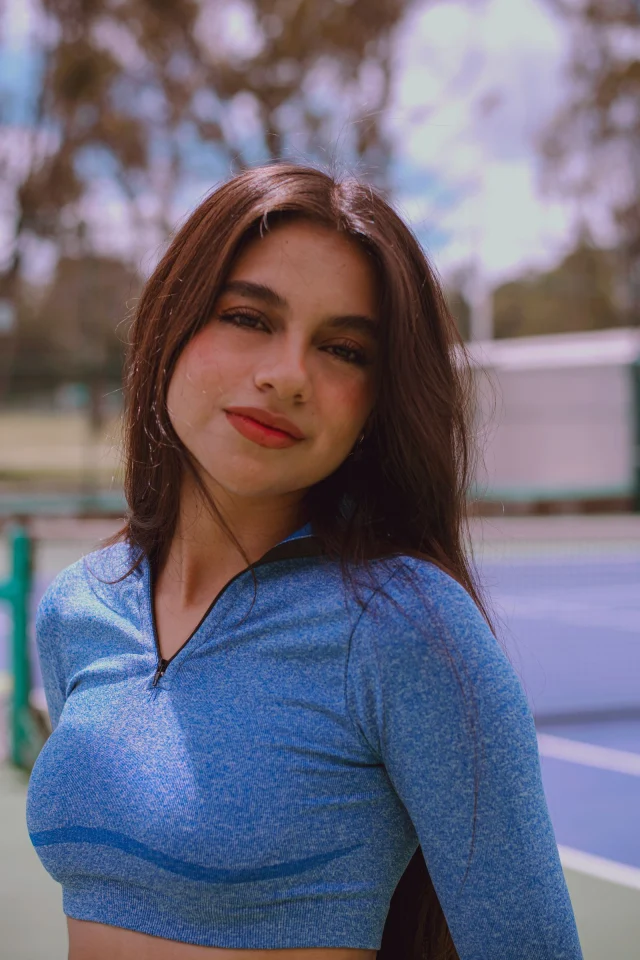
For a zip-neck sold to runners, make it a half-zip in a smooth knit near 160 gsm. The longer zip lets a runner vent more heat on a hard effort. Golf versions go up to 240 gsm. Winter ones are brushed inside.
Brushing gives a knit a raised surface. Under the clothing flammability rules of 16 CFR 1610, raised-surface fabric made only of polyester needs no burn test. Spandex in the blend ends that exemption. Before a brushed polyester-spandex top is sold in the US, the importer has to issue the top's General Certificate of Conformity. The importer bases that certificate on a burn test or on a reasonable testing program. Adult sizes can be tested in-house. We can book an outside lab for $50–200 on your first order in the fabric.
Nylon compression tops feel softer against the skin than polyester ones and cost more. For base layers worn under match shirts, polyester with 15–20% spandex does the job. Flatlock seams join the panels and won't chafe.
Ordering routes
| Ready-made (Stock Match)One of a factory's current styles, matched to your photo | Custom (Made to Order)Your sketch or sample, drafted into a new pattern | |
|---|---|---|
| Smallest order | 50 per style, across any colors and sizes in stock | 50 pieces in every color |
| One-time cost | None | A development fee |
| Price per piece | The factory's price with our sourcing fee added | Quoted per style |
| Sizes 4XL to 6XL | No surcharge | 15% more a piece |
| Time to your US door | 11–18 days once you've paid | 31–48 days from the deposit, 21–30 for a reorder |
| Payment | 100% when you place the order | 30% deposit, then 70% after the inspection photos get your OK |
Four company teams of 13 players can share one Ready-made style in four colors and reach 52 pieces.
The sourcing rate we charge on Ready-made depends on the total of the factory invoices.
| Sourcing fee | Factory invoices for the order |
|---|---|
| 12% | Below $5,000 |
| 9% | $5,000–20,000 |
| 7% | $20,000–50,000 |
| 5% | Over $50,000 |
To see a stock style in person first, buy a single piece at the factory price and pay $15–60 for express delivery. We take the piece price off your order total, but not the shipping.
Sports brands and gyms can start with a test batch of a stock style in whatever mix of colors and sizes is in stock at the factory. When sales pick up, we can remake the style on Custom in a different fabric or fit. Amazon sellers receive the cartons in the US and forward them to an FBA warehouse.
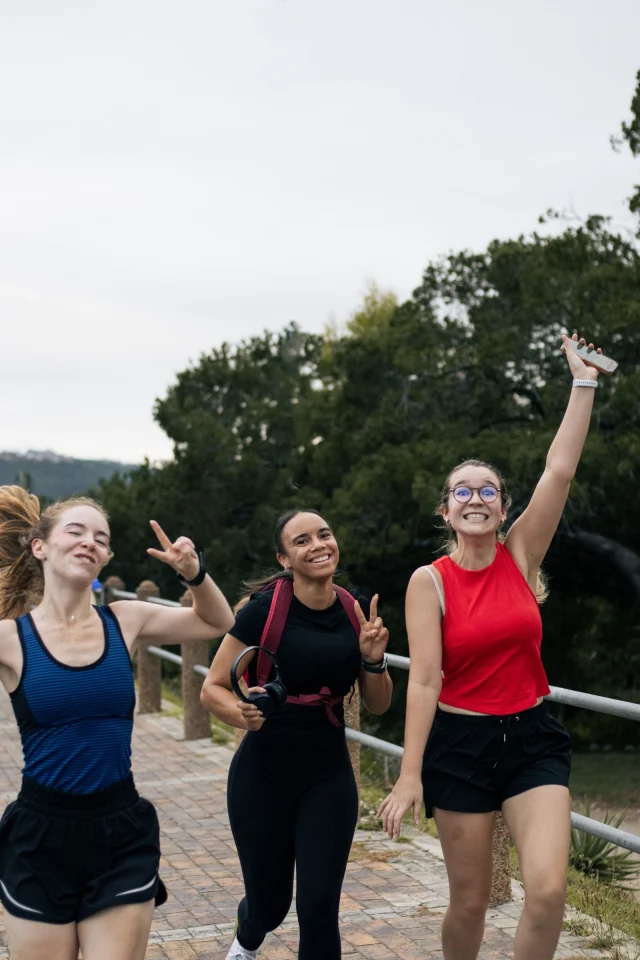
Clubs that sell replica jerseys to fans can add them to the team's run in fan sizes and leave the backs blank.
The factory drafts the pattern for a new Custom style and sews a first sample for a one-off fee of $120–220. You can revise that sample twice within the fee. A third costs $30–80 and pushes bulk back 8–13 days. Patterns graded past 3XL change shape more sharply between sizes. When your range goes that far, the factory sews your largest and smallest sizes as a size set ahead of bulk. That set counts as one paid round.
Custom orders can use any stock color at the mill at no extra charge. An exact Pantone match starts with a test swatch dyed at the mill. That swatch costs $80–150 a color. Bulk then starts 5–7 days later than it would in a stock color. Any reorder within six months is cut from leftover fabric we keep from your run.
All the styles on your order come with Launch Kits at no charge. A style's kit has six product images. One shows an AI model wearing the style. The 10-second phone-format video in it closes on your logo. You get the whole kit within four business days of inspection.
Decoration
We print names and numbers on direct-to-film transfers and heat-press them onto the shirts one at a time. Two-digit numbers up to 8 inches tall fit on one full-size transfer turned sideways. The 10-inch back numbers on hockey and football jerseys run about 11 inches across and go on as two transfers. For a one-color club name repeated across the whole order, we suggest a screen print: it costs less than transfers. We embroider crests on polos and zip-necks. Decoration costs the same whichever route you order on and adds the same number of days to the schedule.
| Method | Price | Days added |
|---|---|---|
| Direct-to-film transfer, 11.7 inches tall and 8.3 wide at most | $1.50–3.50 for one transfer | 3–5 |
| Screen print | $15–45 for a screen. One color at one spot is $0.50–1.20 more a garment | 7–14 |
| Embroidery | Logo file $10–75. A thousand stitches cost $1–3 | 5–10 |
| Tackle twill | Quoted per design | Given with the quote |
Your neck label and logo packaging are part of every Custom price. On Ready-made pieces, we swap the factory's label for yours at $0.35 a garment. Branded bags for those pieces cost $0.45. A hang tag costs $0.25 on any order.
Prices per piece
Chinese factories quote custom sportswear without freight or US duty. Jerseys and polos from China fall under the 52% US duty on knit polyester tops. Duty on polyester shorts is 47.9–48.6%. Section 301 tariffs account for 20 of those percentage points. We bill duty at the amount customs charges.
Jerseys designed and sized mainly for children aged 12 or younger are children's products in the US. The importer has to certify them on a Children's Product Certificate after tests at a lab that the federal Consumer Product Safety Commission accepts. We send decorated youth jerseys to such a lab and pass on its fee of $50–250 a test at cost. We act as the importer on duty-paid shipments and issue the certificate. A permanent tracking label in every youth garment shows where and when it was made.
| Custom sportswear at Chinese factories | 50 pieces | 500 pieces |
|---|---|---|
| Soccer kits, jersey and shorts | $7–12 | $6–10 |
| Volleyball jerseys | $8–16 | $8–12 |
| Rugby jerseys | $12–16 | $9–13 |
| Baseball and softball jerseys | $10–17 | $8–14 |
| Hockey jerseys | $11–19 | $9–17 |
| Football jerseys | $11–18 | $9–14 |
| Running shorts | $6–10 | $6–9 |
| Running singlets | $6–8 | $5–7 |
| Performance polos | $7–11 | $6–9 |
| Cycling jerseys | $8–16 | $7–14 |
| Zip-neck tops | $8–13 | $7–12 |
| Compression tops | $6–12 | $5–9 |
Take one photo of the front of the piece you want made and one of the back, then upload them. You'll have prices on the Ready-made and Custom routes within 24 hours of the upload.
Get a quote